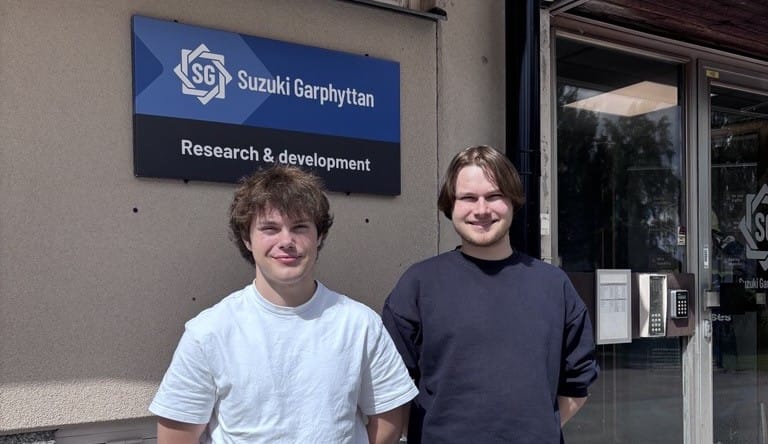
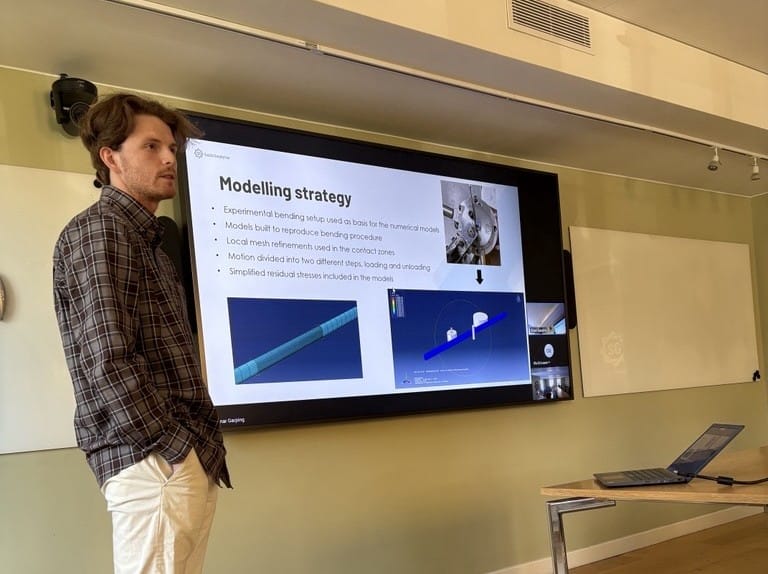
In June, bachelor’s thesis students Anton Nilsson and Holger Nygren presented the results of their work on how AI could support laboratory analysis of steel. Their project explored how AI-based image analysis could complement traditional experience-based methods used to evaluate steel microstructures. The students evaluated both AI tools available within existing analysis software and custom-trained AI models adapted to Suzuki Garphyttan’s own data. The results were promising. The AI-based methods showed a good level of agreement with manual measurements, while also making it possible to analyze a significantly larger number of measurement points. This can provide more representative data and enable more detailed evaluations of steel microstructures.
From thesis work to summer project
The work continued over the summer, when Holger stayed at Suzuki Garphyttan to take the next steps in developing and evaluating the technology. His summer assignment initially involved further evaluating the AI software used during his bachelor’s thesis, building an image library and creating a Standard Operating Procedure (SOP) describing the process from start to finish. The project then expanded when Holger was asked to evaluate a new AI software solution from another supplier. In addition to building an image library and documenting the process, he developed two AI models for grain size measurement: one for stainless steel and a more advanced model for carbon steel.
-The summer has been very enjoyable. Unlike last summer, I had one large, continuous project, which gave me the opportunity to really dive into the subject and work in greater depth, says Holger Nygren. Working with a new software platform was challenging at first, but his previous experience proved valuable.
-It felt like a natural continuation of my bachelor’s thesis. What I learned there could be applied directly to this project. Training my own models and learning more about microstructures was particularly valuable, especially carbon steel, which has a more complex structure than stainless steel.
Exploring what AI can add to materials analysis
The work demonstrates one of the ways AI can potentially complement expertise and established laboratory methods. Rather than replacing the knowledge and experience of laboratory specialists, AI-based image analysis could help process larger datasets, increase measurement capacity and provide additional insights into material structures. At the same time, the project highlights the importance of validation. Before AI-based methods can become part of routine laboratory work, their accuracy, robustness and applicability need to be thoroughly evaluated. For Suzuki Garphyttan’s R&D team, this is an important part of the exploration: understanding not only what AI can do, but also where it can create real value in materials analysis. The work will continue as the company evaluates the results, develops the AI models further and explores how the technology could be integrated into practical laboratory applications in the future.